


Process optimization
for growing organizations
Bring structure to recurring processes and discover where working smarter yields more than working harder.

Why growth often does not require harder work, but smarter organization
Many organizations do not get stuck because people do not do their work well.
They get stuck because processes that worked fine for years begin to require more and more coordination, coordination and manual work as the organization grows.
New employees are added. Tasks are divided. Systems are being added. Departments develop their own working methods.
What was once clear is slowly becoming more complex.
The challenge of growth
The faster an organization grows, the more processes arise along the way.
Not from a plan, but because it seems like the best solution at that moment.
An additional consultation.
An extra check.
An additional spreadsheet.
An additional system.
Often logical in itself. But over time, an organization emerges in which more and more people become dependent on each other to get the work done.
As a result, the same process takes more and more time, energy and coordination.
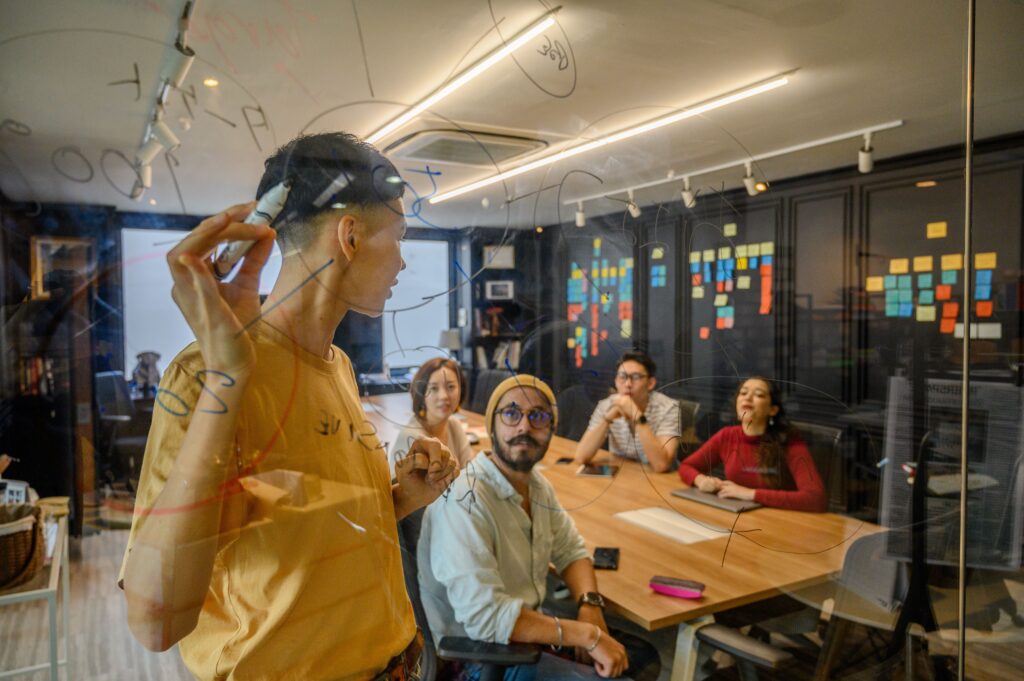

Why processes are becoming increasingly complex
Most organizations only notice that processes no longer work optimally when the pressure starts to increase.
Deadlines are more difficult to meet. Decision making slows down. Teams experience more work pressure and the same questions come up again and again.
Often the cause is not people, but the way processes have grown over the years.
What once worked for a small team does not automatically work for an organization with multiple teams, departments or locations.
Signals that processes are no longer growing
Many organizations recognize one or more of the following signals:
- the entrepreneur or management remains involved in everything;
- important knowledge is in the minds of employees;
- processes are different for each person;
- departments work at cross purposes;
- the same information is processed multiple times;
- errors arise during transfers;
- a lot of consultation is needed to maintain an overview;
- growth requires more and more effort.
This is where the greatest opportunity for process optimization often arises.


For which organizations is process optimization intended?
Process optimization is especially interesting for organizations that notice that further growth requires more and more coordination, coordination and manual work.
This often concerns growing SME organizations where processes have developed organically over the years and daily operations are becoming increasingly complex.
For example, organizations recognize themselves in one or more of these situations:
- The organization grows faster than the processes.
- Teams work hard, but experience less overview.
- Responsibilities are not always clearly assigned.
- Important knowledge is held by a limited number of employees.
- There is a need for more structure, ownership and scalability.
- The organization wants to become less dependent on individuals.
Organizations between approximately 5 and 50 employees in particular are often the first to recognize these challenges.
Where process optimization adds the most value
The greatest opportunities for improvement are often in processes that occur every day.
Often the cause is not people, but the way processes have grown over the years. What once worked for a small team does not automatically work for an organization with multiple teams, departments or locations.
For example:
- customer processes;
- sales and quotation processes;
- planning and operation;
- internal cooperation;
- management information;
- employee onboarding;
- knowledge sharing;
- administrative processes.
This is precisely where the greatest profits often arise:
- more overview;
- fewer errors;
- clearer responsibilities;
- better cooperation;
- less dependence on individuals;
- more room for growth.


Our approach
Many processes once arose logically, but do not always grow with the organization. That is why we first look at how processes actually run today, before determining where improvement, automation or AI adds the most value.

1. Insight
We map out how a process actually runs, which employees are involved and where bottlenecks arise.
This makes it visible where delays, duplication of work or dependencies arise.

2. Optimize
Based on the analysis, we determine which improvements will have the most impact. Consider simplifying process steps, clarifying responsibilities and organizing information more intelligently.

3. Deposits
We support you in implementing improvements within processes, teams and systems.
We also look at where automation or AI can contribute to a more efficient and scalable process.

What does process optimization cost?
The investment varies per organization and depends on the size, complexity and desired approach.
During a free introduction, we discuss where processes slow down, where unnecessary coordination occurs and which improvements can have the most impact.
This provides a clear picture of the possibilities, the approach and the associated investment.

Practical example:
Value Maritime
At Value Maritime it turned out that a large part of customer communication and operational coordination took place via e-mail. Important information was spread across mailboxes, which meant that follow-up took a lot of time and knowledge was difficult to transfer.
By first mapping the process behind the email flows, it became visible where delays occurred and which activities required a lot of manual work. Based on this, improvements were made and opportunities arose for further automation.
The result was more overview, a more efficient working method and less dependence on individual employees.
Where do we often see opportunities for improvement?
- Customer requests that come in at different places
- Sales follow-up that depends on individual employees
- Teams recording the same information multiple times
- A lot of manual work in planning and administration
- Reports that take a lot of time to compile
- Processes that come to a standstill when someone is absent
- Information spread across different systems
“Previously, everyone was constantly going through mailboxes and determining their own priorities. Now there is finally more peace in the process and people no longer have to sort everything out manually.”